
Leg discomfort does not always mean you need to see a specialist. Soreness after exercise or temporary swelling after a long day can improve with rest and movement.
However, if you experience recurring swelling, aching, visible varicose veins, or slow-healing wounds, you might consider an evaluation to diagnose or rule out a vascular condition.
Our team at Florida Lakes Vein Center helps patients understand which symptoms deserve attention and when treatment makes sense. If you are wondering when to see a vein specialist, use your symptoms as a starting point. Some concerns can wait for a scheduled appointment, while others require prompt medical attention.
Keep reading this guide to learn more about when you should request a screening with our team.
Table of Contents
- Signs You Should See a Vein Specialist
- Symptom Guide: What Is Normal and What Is Not?
- What Does a Vein Specialist Do?
- What to Expect at Florida Lakes Vein Center
- Frequently Asked Questions
Signs You Should See a Vein Specialist
Some people have vein concerns, but do not feel everyday discomfort. You should consider scheduling an appointment if you regularly experience:
- Aching or heaviness in your legs
- Swelling around your ankles or calves
- Varicose or spider veins that continue to develop
- Itching or burning around visible veins
- Leg cramps, especially at night
- Symptoms that worsen after standing or sitting
- Skin discoloration or other skin changes
- A sore or wound that does not heal normally
Don’t wait until your symptoms become severe to meet with a vein specialist. Our team can evaluate recurring concerns and determine whether vein disease contributes to your discomfort.
Symptom Guide: What Is Normal and What Is Not?
Not every leg symptom signals vein disease. When to see a vein specialist often depends on how frequently your symptom occurs, whether it resolves, and whether other symptoms appear with it.
| Symptom Level | What You Might Notice | What You Should Do |
| Usually temporary | Mild soreness after exercise or occasional tired legs that improve with rest | Give your legs time to recover and monitor for recurring symptoms |
| Worth checking | Recurring swelling, heaviness, aching, cramping, visible veins, itching, or skin changes | Schedule an evaluation with a vein specialist |
| Needs prompt attention | New or worsening swelling, pain, warmth, redness, or discoloration in one leg | Contact a provider promptly for evaluation |
| Emergency | Sudden shortness of breath, chest pain, coughing blood, or fainting | Seek emergency medical attention immediately |
If you are unsure when to see a vein specialist, recurring symptoms provide a good reason to schedule an evaluation. Our team can discuss your symptoms, use ultrasound technology to assess your veins, and help you understand your current circulation and vascular health.
What Does a Vein Specialist Do?
While a primary care provider can evaluate many common health concerns, including leg symptoms, a vein specialist brings additional expertise to conditions that affect the veins and circulation.
Our vein specialists evaluate concerns such as:
- Varicose veins
- Spider veins
- Venous ulcers
- Deep vein thrombosis
- Other symptoms associated with vein disease (also called chronic venous insufficiency)
What to Expect at Florida Lakes Vein Center
Knowing what to expect can make scheduling an appointment feel easier. Your first visit begins with a conversation about what changes you have noticed and how your symptoms affect your daily life.
Your provider might ask about:
- Current symptoms and their severity
- Factors that alleviate or worsen discomfort
- Family history of vein disease or blood clots
- Lifestyle factors that affect circulation
Then, your specialist might perform an examination and recommend ultrasound imaging if appropriate. After reviewing the findings, the team can explain your diagnosis and treatment options.
Vein Ultrasounds
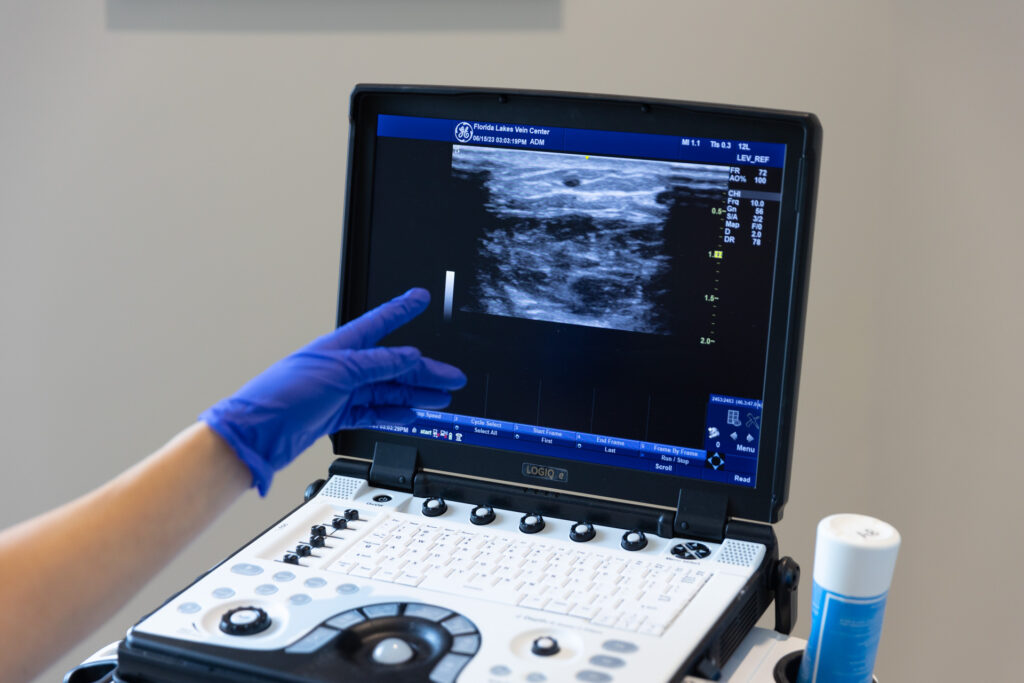
A vein ultrasound gives your provider a closer look at how blood moves through your legs. This tool can identify changes in blood flow and problems with the valves inside your veins. We use those findings alongside your symptoms and medical history to understand what contributes to your concerns.
Evaluation with advanced ultrasound technology helps our team create a personalized care plan that addresses your unique situation.
Treatment Options
Depending on your diagnosis, our team might recommend treatments such as:
- VenaSeal, an injectable microfoam that collapses damaged veins.
- Varithena, an injectable adhesive that closes faulty vessels.
- Sclerotherapy, an injectable solution that collapses small spider veins.
- Wound care, a comprehensive plan that addresses slow-healing vascular wounds.
FAQs About Seeing a Vein Specialist
Knowing when to see a vein specialist and what to expect at your appointment can make treating your vein condition less stressful. Here, we answer some common questions about our process.
Do I need a referral to see a vein specialist?
Whether you should get a referral depends on your insurance plan and the type of care you need. Some plans allow patients to schedule specialty care directly, while others require a referral from a primary care provider to offer coverage.
If you don’t know, you can contact your insurance company or get in touch with our team to confirm which requirements apply to you.
Is vein treatment covered by insurance?
Insurance can cover vein treatment when it meets the plan’s medical necessity requirements.
Typically, a vein is medically necessary to treat when it becomes larger than 3 millimeters in diameter and has more than 500 milliseconds of reflux (blood flowing backwards). Insurance does not usually cover cosmetic vein treatments.
Exact coverage also depends on your diagnosis, symptoms, ultrasound findings, treatment type, and individual benefits.
What happens if I wait to see a vein specialist?
Waiting to get an evaluation can allow symptoms related to vein disease to continue or worsen, sometimes with new complications.
Delaying care might mean varicose veins become more uncomfortable and swollen. Ongoing swelling and pressure in the lower legs could contribute to skin changes and, in advanced cases, venous ulcers.
A screening helps identify the source of recurring symptoms and gives you an opportunity to discuss treatment or management options.
Can a vein specialist help if I do not have varicose veins?
Yes, you can experience symptoms of vein disease—and seek treatment—without prominent varicose veins. Swelling, aching, heaviness, cramping, itching, or skin changes may signal a circulation concern.
Our specialists can review your symptoms and use diagnostic testing to determine whether your vein health contributes to your discomfort.

Get Answers From Our Specialists
Your legs tell you a lot about your vein health. If recurring discomfort and visible veins take away from your favorite moments, our team can evaluate your condition and help you find solutions for your concerns.
If you’re wondering when to see a vein specialist, take the next step towards optimal vein health by requesting a screening.