
As one of the most common vein conditions, spider veins affect many people at some point in their lives. These damaged vessels, although mostly harmless, can create an unwanted discoloration on the legs.
To help our community feel more confident and comfortable with fewer visible veins, we provide sclerotherapy. Near Bradenton, our providers at Florida Lakes Vein Center use non-surgical, efficient treatments that allow you to dust off your favorite shorts or skirts and wear them with confidence again.
If you want to learn about spider vein treatment, use this post as a guide for everything you need to know.
We answer some common questions and clear up myths to help you choose treatment with clarity.
In this post, we cover:
FAQs About Spider Vein Basics
Before we discuss what to expect during your sclerotherapy appointment, let’s answer a few questions, so you can understand more about the condition and why treatment works.
In this section, we explore answers to common questions about spider veins that many patients have during their new patient appointments.
What are spider veins?
Spider veins form when the blood vessels under your skin expand and weaken. Typically, these damaged vessels appear in web-like clusters along the legs, feet, or ankles. More often than not, they don’t cause discomfort, but many people feel less confident about the way they look.
Researchers don’t have clarity on the exact cause of spider veins. However, spider veins may indicate early signs of chronic venous insufficiency (CVI), a condition that reflects poor blood flow through damaged veins.
When you visit our practice for sclerotherapy near Bradenton, we assess your vascular health, evaluate possible contributing factors for your spider veins, and perform treatment to help you reclaim your confidence.
Who is at a higher risk of developing spider veins?
Various factors play a role in your likelihood of developing spider veins. Essentially, anything that puts pressure on the veins and weakens them can lead to the formation of damaged vessels.
Some factors that put you at higher risk for spider veins include:
- Sitting or standing for long periods of time. Patients who work desk jobs, or individuals who stand on their feet without moving much (such as hairdressers or teachers), might be more susceptible to spider veins.
- Having genetic predispositions, usually indicated by other family members with spider veins or other forms of vein disease.
- Taking hormonal birth control or using hormone replacement therapy. Each of these can alter blood flow and vein health, making it more likely for vein walls to weaken.
- Experiencing hormonal changes, such as those associated with pregnancy or menopause. These situations affect vein integrity and can lead to damaged vessels.
- Being obese, as excess weight puts pressure on the veins and blood vessels.
- Aging, because vessels weaken over time as skin becomes thinner, so you can see the veins within more easily. Many people notice spider veins starting between the ages of 30 and 50.

When do spider veins need treatment?
Typically, patients seek spider vein treatment when they want to reduce the appearance of the visible vessels.
While a majority of spider veins have no symptoms, you might experience some discomfort if you have spider veins alongside other complications. Possible effects include:
- Burning
- Cramping
- Itching
- Pain
- Tired legs
If you have these symptoms, we highly recommend visiting an expert for a vein screening. We can evaluate your vein health and circulation to understand whether the symptoms stem from something more serious, such as varicose veins or vascular conditions like CVI.
How do spider veins differ from varicose veins?
These 2 vascular conditions both affect veins, but they differ in size, symptoms, appearance, and severity.
As mentioned before, spider veins are thin, web-like vessels that usually have no symptoms. While they are visible under the skin, they typically do not “stick out” or bulge.
Varicose veins appear as thicker, swollen, twisted veins, and they often cause discomfort or pain. When vein valves become damaged and cannot direct blood flow upwards, blood can pool and lead to varicose veins.
Both of these conditions have similar risk factors, as they result from faulty vessel walls that weaken and alter blood flow. No matter which condition you have, we recommend visiting our providers for assessment and treatment to prevent more serious complications of compromised vascular health.
FAQs About Sclerotherapy Spider Vein Treatment
Dr. T.C. Lackey II, D.O. and our providers use sclerotherapy near Bradenton to help patients love their skin again and reduce the risk of developing vein disease.
In this section, we answer common questions about what sclerotherapy treatment involves and what patients can expect.
How does sclerotherapy work?
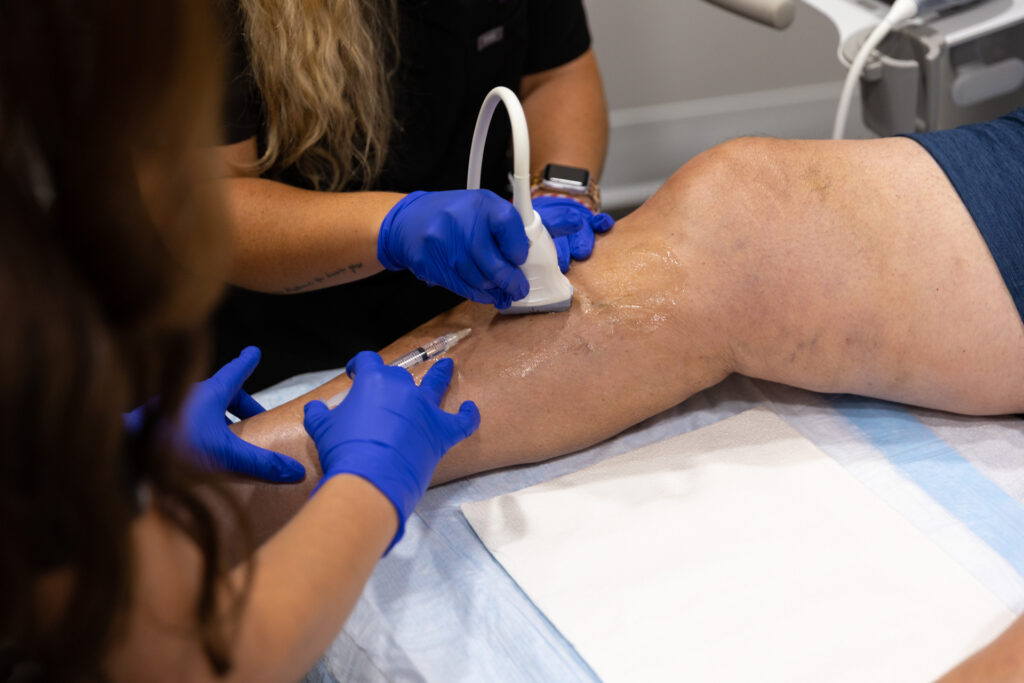
To effectively reduce the appearance of spider veins, our team uses sclerotherapy liquid injections. The formula contains a sclerosant, an active ingredient that collapses vessel walls so they seal off.
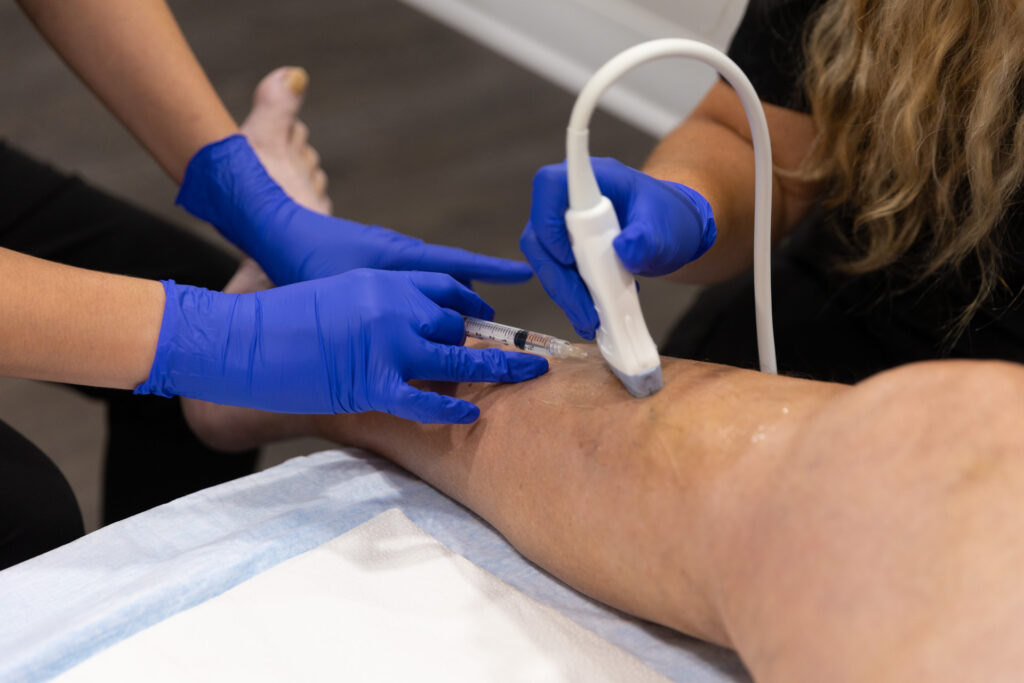
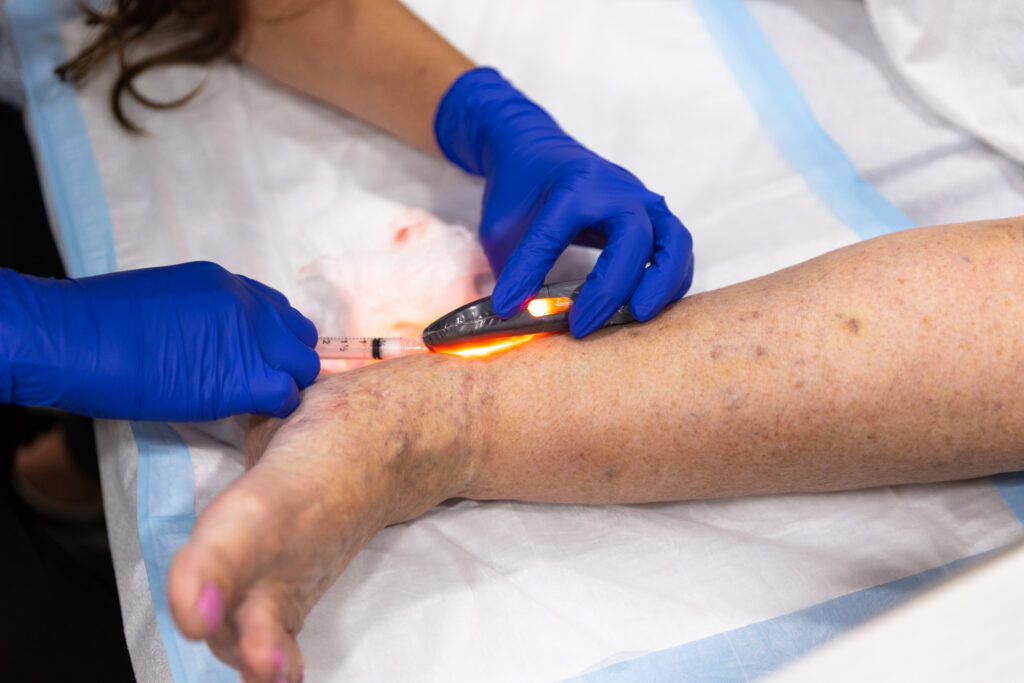
During your appointment, your provider might use ultrasound technology to locate the damaged vessels and identify the best injection sites. Once they administer the solution, it interacts with the vessels and forces them to close.
Your body stops blood flow to the treated vein and reroutes blood to healthier veins nearby. This process fully closes the treated vessel, and it allows your body to reabsorb the vein with time to fade it fully.
How many appointments do I need?
Since sclerotherapy gradually closes and fades spider veins, Dr. Lackey and our vein specialists typically recommend 4 appointments of sclerotherapy.
Near Bradenton, each of these 30 to 45-minute sessions allows your provider to treat the vessels more completely while giving your body time to heal in between appointments.
Depending on the severity of the spider veins, some individuals might require more than 4 appointments to treat each vein in the cluster safely.
Does sclerotherapy hurt?
No, when you visit us for sclerotherapy near Bradenton, you should not feel pain. Before we begin treatment, we administer a numbing injection near the treatment site to promote your comfort.
If you feel anything, you might notice small pokes from the needle, but they should be tolerable.
Can sclerotherapy treat varicose veins?
Depending on the size and severity of your varicose veins, we may use sclerotherapy. If your varicose vein is small (under 3mm in diameter) and does not show significant signs of reflux (blood flowing backwards), our providers can offer sclerotherapy to help reduce its appearance.
But for varicose veins that hit a specific size requirement, we recommend VenaSeal and Varithena. These stronger treatments efficiently seal larger varicose veins and reroute blood flow to relieve uncomfortable symptoms of damaged veins.
Is sclerotherapy permanent?
Sclerotherapy permanently closes treated veins. After treatment, you can see their appearance gradually fade, which helps you feel more confident and comfortable.
However, additional spider veins can form in the future, so the treatment does not eliminate spider veins entirely. If new visible vessels appear as your risk factors change, we can treat those with sclerotherapy as well.
FAQs About Recovery After Sclerotherapy
Now that you understand a bit more about how sclerotherapy works, let’s answer common questions our patients ask about recovery.
This section covers what you can expect to feel and do after your sclerotherapy near Bradenton.
Does sclerotherapy have downtime?
One of the best parts of sclerotherapy at our vein clinic is that the treatment requires no downtime. Once we finish the injections and prepare you to leave, you can drive yourself home and enjoy light exercise, work, and most normal activities the same day.
What should I expect after my treatment?
In the next few days to weeks, you might experience minor discomfort or itching as the body heals from the injections. You may also see small welts at the injection sites, with redness or bruising. These completely normal reactions should subside on their own with time.
What does recovery after sclerotherapy look like?
After your treatment, your provider wraps your leg in a compression bandage that you should keep on for the next 48 hours. This dressing protects your skin and optimizes blood flow to enhance the results of treatment.
During this initial recovery period, Dr. Lackey and our team also recommend that you:
- Avoid swimming pools, baths, saunas, and hot tubs for the next 72 hours. This protects the injection sites from inflammation or irritation.
- Engage in light walking for 20-minutes at a time to enhance blood flow. Do not perform intense physical activity for the next few days.
- Avoid direct sun exposure for the next few weeks. The injection sites are photosensitive, meaning they are extra susceptible to sunburn and irritation. When outside, use sun protection to reduce the risk of sun damage.
- Take anti-inflammatory medications to alleviate minor pain or soreness. Over-the-counter options include Motrin, Tylenol, or Aleve.
- Use ice packs on the injection site for the first 48 hours to alleviate swelling and discomfort. After 48 hours, use a moist, warm towel in 20-minute intervals.
- Avoid long periods of sitting or standing for the first week to prevent blood flow complications.

Request Your Screening and Get Started
Sclerotherapy near Bradenton helps you put away the long pants and wear your favorite shorts again. Request a screening so we can answer any additional questions you may have, and help you get back to doing what you love without the annoyance of visible veins.