

When you experience achiness and discomfort in your legs, seeking medical attention from experienced vein specialists at Florida Lakes Vein Center allows you to uncover the root of the issue.
While many individuals tend to brush off soreness and leg fatigue, addressing symptoms promptly decreases the risk of dangerous complications like deep vein thrombosis.
Deep vein thrombosis (DVT) is a vascular concern that can turn into a life-threatening issue if not caught early. In this guide, we discuss the truth about deep vein thrombosis, so you can stay informed about your vein health and treatment options.
When it’s time to seek deep vein thrombosis treatment near Myakka City, our professionals use their expertise to swiftly diagnose and manage this clot condition. Keep reading to uncover common misconceptions and what you need to know about DVT.
Misconception #1: “Deep Vein Thrombosis Is a Regular Blood Clot”
In your legs, you have 2 types of veins: superficial and deep. Superficial veins sit close to the skin’s surface, whereas deeper veins in the leg carry most of the blood back to the heart.
When veins cannot properly move blood, circulation can become sluggish, leading to a blood clot. Deep vein thrombosis refers to a blood clot in your deep veins, rather than the veins close to the skin’s surface.
Deep vein thrombosis differs from a superficial blood clot, as DVT has a much higher risk of dangerous side effects. Blood clots in the deep veins can break off from the vein wall and travel through the body. If the blood clot travels to the lungs, this can become life-threatening.
Blood clots in the superficial veins rarely travel to the lungs, making DVT a more serious concern. By staying aware of your risk factors for developing deep vein thrombosis and practicing healthy habits, you can reduce the risk of a dangerous blood clot.
Misconception #2: “DVT Is Always Life-Threatening”
Although a blood clot can break off and travel through your body, often up to the lungs, DVT itself does not cause serious effects. A pulmonary embolism (PE) is a dangerous and life-threatening event that can occur from DVT, but not every DVT results in a pulmonary embolism.
By acting early and seeking deep vein thrombosis treatment near Myakka City, you can reduce the risk of more serious complications.
If a deep vein thrombosis becomes a pulmonary embolism, individuals usually experience:
- Shortness of breath with chest pain
- Pale, clammy skin, or excessive sweating
- Rapid heartbeat
- Sharp pains in the jaw, neck, arms, or back
- Feelings of lightheadedness or anxiety
If you have any of the above symptoms, contact our office immediately.
To minimize your risk of deep vein thrombosis and a subsequent pulmonary embolism, visit Dr. T.C. Lackey II, D.O., and our expert providers. We encourage you to contact us if you experience any symptoms related to DVT or pulmonary embolism, so that we can address those concerns immediately.
Our providers assess your risk factors for developing vein-related complications, and we provide swift DVT treatment if needed to manage your condition and optimize your vascular health.
Misconception #3: “Symptoms of DVT Are Always Present”
Various symptoms can accompany deep vein thrombosis, but up to 30% of people don’t experience symptoms. Additionally, symptoms can show up as minor changes, making it difficult to know when to visit a specialist for deep vein thrombosis treatment near Myakka City.
If symptoms occur, individuals with DVT might experience:
- Swelling in the leg, which could happen suddenly
- Warmth in the swollen area
- Pain or tenderness in the leg that worsens with activity
- Changes to the skin, such as reddening or discoloration
- Swollen veins at the surface of the skin that appear larger than normal
Since DVT can show up without symptoms, many individuals don’t know when they have a blood clot until it reaches their lungs. Pulmonary embolisms are often symptomatic and should be treated promptly. By getting screened and monitoring your vein health, we can catch concerns as early as possible.
Misconception #4: “Deep Vein Thrombosis Only Affects Inactive People”
While inactivity can cause a dangerous blood clot, inactivity is not the only cause of DVT. While some result from lifestyle choices, others have genetic sources, or are tied to other medical conditions.
Ultimately, when blood flow is sluggish or impaired, you could be at risk for deep vein thrombosis.
Common causes of deep vein thrombosis include:
- Genetic predispositions to blood clotting disorders or a family history of DVT itself.
- Damage to veins from surgery, inflammation, infection, or injury.
- Limited blood flow from long periods of immobility, including sitting in the car, working at a desk, or recovering from surgery.
- Various lifestyle choices. Many habits put pressure on the veins or damage the veins themselves. These factors can include smoking, taking birth control pills, and obesity.
- Medical conditions, including cancer, COVID-19, and autoimmune diseases.
- Existing vascular conditions, like varicose veins or chronic venous insufficiency.
Essentially, anything that damages veins, restricts blood flow, or puts pressure on veins can cause DVT.
By staying aware of the above causes and risk factors, you can effectively optimize blood flow or seek medical guidance to prevent blood clots from forming.
Misconception #5: “DVT Treatment Is Invasive”
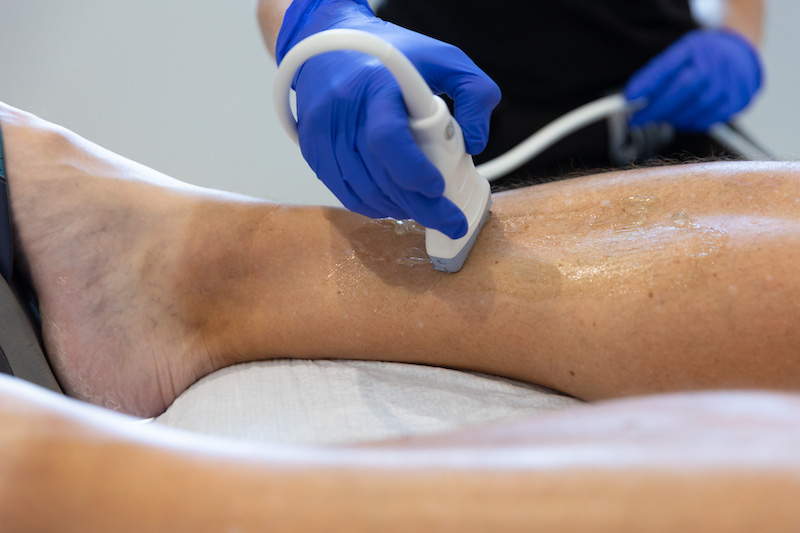
When you come into our clinic or get referred to us by your surgeon or doctor, we act quickly to help rule out or confirm deep vein thrombosis. Our treatment process includes using vein ultrasounds and prescribing science-backed medication if necessary.
Ultrasound
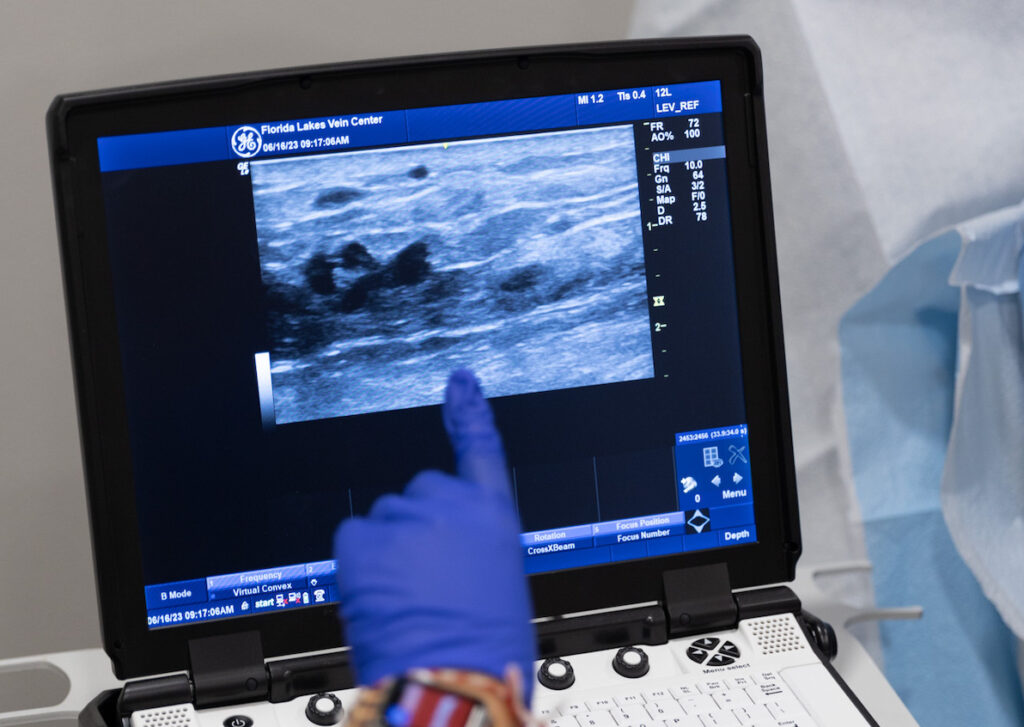
Our clinic uses minimally invasive and nonsurgical approaches to all vein treatments, including deep vein thrombosis treatment. Near Myakka City, we begin by examining your veins with Doppler and Duplex ultrasound to identify possible clots.
- Doppler ultrasound allows our providers to see how well blood flows through your veins. High-frequency waves bounce off red blood cells to show how fast your blood moves and if it becomes restricted at any point along the vein.
- Duplex ultrasound uses regular ultrasound technology combined with Doppler technology to provide a visual of the vein structure. Using Duplex ultrasounds, we can see if the vein is obstructed and identify the precise location of the blood clot.
Medications
Once we confirm the presence of deep vein thrombosis, we prescribe blood thinners, such as Eliquis or Xarelto.
These medications work with your body to manage the existing clot and prevent new ones from forming. With the experts at Florida Lakes Vein Center, you can experience deep vein thrombosis treatment with medications instead of surgery and invasive measures.
Compression Stockings
In addition to medication, we recommend wearing compression stockings to enhance blood flow and prevent additional clots. These garments apply pressure to the leg, squeezing the veins to help blood move more efficiently.
Often, our patients with DVT wear compression stockings during their course of treatment with us.
If you need assistance choosing the best compression stockings for your concerns, our team can point you in the right direction. We have some for purchase at our clinic, or we can prescribe you the appropriate compression stockings for your needs.
Misconception #6: “Blood Thinners Dissolve Blood Clots”
For deep vein thrombosis treatment near Myakka City, our providers prescribe anticoagulants (blood thinners) to help control the blood clot. Many people believe the blood thinners dissolve the blood clot, but the medication actually works in a few ways to prevent the clot from worsening.
Blood-thinning medications help treat DVT by:
- Preventing the clot from growing larger and affecting the surrounding veins and tissues.
- Reducing the risk of the clot breaking off the vein wall and traveling to the lungs.
- Minimizing the possibility of new blood clots.
- Reducing any additional damage to the vein walls, which leads to worsening vein complications.
Essentially, the medication stops the clot from growing or causing further damage. Your body breaks it down over time, typically dissolving it over a few weeks or months, depending on the severity.
During various follow-up appointments, we can track the size of the clot and confirm that the medications are working as they should. Your DVT treatment includes ongoing support from our team, as we want to be your continuous partner for your vein concerns.
Request an Appointment for Deep Vein Thrombosis Treatment
Near Myakka City, we support patients who have or suspect deep vein thrombosis as they explore treatment options, and we guide them on a journey to better vein health.
While not directly dangerous, deep vein thrombosis can become serious if not assessed and treated promptly. Our providers understand the unique nature of DVT, which is why we work efficiently to address your issue.
If you suspect deep vein thrombosis or have been referred to us for an evaluation, request a screening. From there, our team welcomes you to Florida Lakes Vein Center to expertly diagnose your vein concerns.
Have vein concerns and want our expert guidance? Use our vein screening tool to discover how we can help you reclaim your vein health.
About Florida Lakes Vein Center
Discover why vein care is a “No Veiner” with the team of professionals led by Dr. T.C. Lackey at Florida Lakes Vein Center. He and the vein experts help Florida natives reduce the impact of vein disease through nonsurgical treatments. Whether that involves managing varicose veins or deep vein thrombosis treatment near Myakka City, we can help you find efficient symptom relief.