
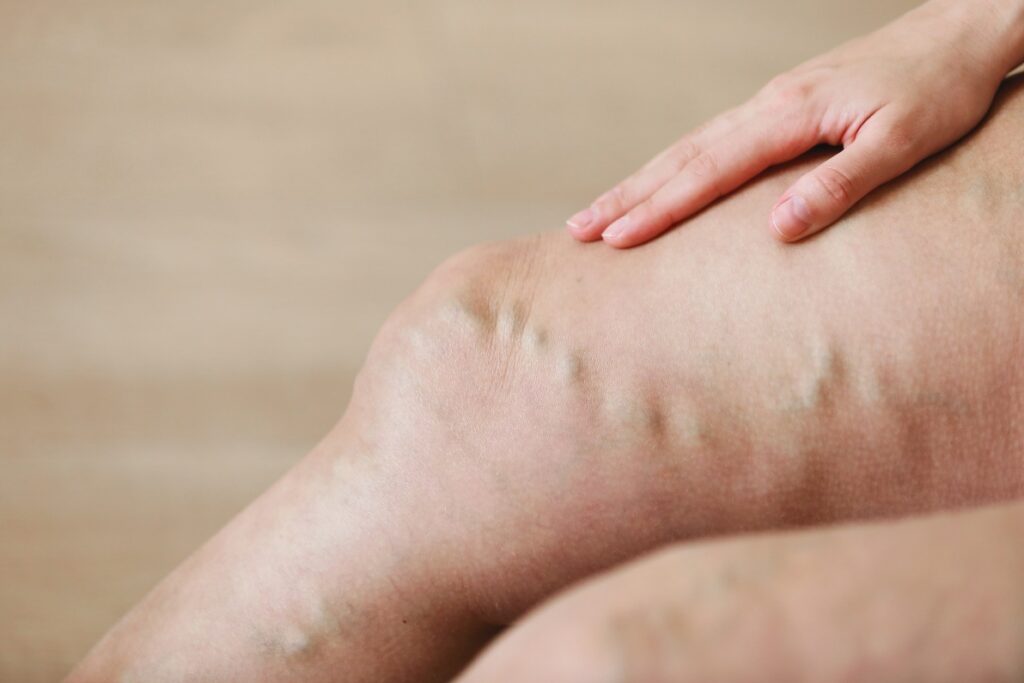
Varicose veins are usually not dangerous or an immediate medical emergency, especially when they cause no symptoms. However, varicose veins can sometimes lead to complications such as bleeding, skin changes, or venous ulcers.
If you have concerns about your vein health, Florida Lakes Vein Center can evaluate your symptoms and discuss potential treatment options.
If you are asking, “Are varicose veins dangerous?” the full answer depends on your symptoms and the function of your veins. Our team helps determine whether your veins are simply visible or showing signs of a deeper circulation problem.
What Varicose Veins Can Indicate
Varicose veins develop when veins become enlarged and blood does not move efficiently back toward the heart. Tiny one-way valves inside your leg veins normally help direct blood upward. When those valves weaken, blood can flow backward and collect in the veins (reflux), which creates pressure.
That process can create the raised, twisted, or discolored veins you see beneath the skin.
Varicose veins do not automatically mean you have a serious health problem. Some people have visible veins with little or no discomfort, while others experience aching, heaviness, swelling, itching, or cramping.
When Varicose Veins Become a Concern
You should pay closer attention when your varicose veins begin affecting how your legs feel or when you notice changes in your skin.
Schedule a visit with a vein specialist to discuss symptoms if you experience:
- Aching or throbbing
- Leg heaviness or fatigue
- Swelling around the ankles or calves
- Itching or burning
- Nighttime cramping
- Skin discoloration
- Changes in skin texture
- Bleeding from a varicose vein
- A wound that does not heal
These symptoms can indicate that your varicose veins connect to underlying chronic venous insufficiency (CVI), commonly known as vein disease. Our team can evaluate and treat the most common forms of CVI and related complications.
Complications to Watch For
So, are varicose veins dangerous? Most do not pose an immediate threat, but their structure and associated conditions do have some risks.
| Complication | What It Can Mean |
| Skin Changes | Long-term vein pressure can contribute to discoloration, irritation, or other changes in the lower-leg skin. |
| Bleeding | A varicose vein can bleed after minor trauma or other irritation. Significant bleeding requires prompt medical attention. |
| Venous Ulcers | Advanced vein disease can contribute to open sores that struggle to heal, often around the ankles. |
| Deep Vein Thrombosis | DVT involves a clot in a deeper vein and requires prompt medical evaluation to prevent further complications. |
Varicose veins do not automatically progress to these complications, but regular evaluation and proactive care can minimize your risk. With treatment, our team can support healthy circulation and protect your long-term vein health.
Benefits of Early Treatment
You do not need to wait until varicose veins become severe or painful before seeking an evaluation. Early assessment helps identify possible causes of your symptoms and offer options for treatment. Preventative care allows your body to reroute blood flow to reduce the risk of complications.
How Florida Lakes Vein Center Helps
Our team begins by understanding your unique situation and medical history to build a tailored care plan. We use 2 types of ultrasound (Doppler and Duplex) to assess vein structure, circulation, and identify any obstructions.
If we find concerning varicose veins, evidence of circulation concerns, or possible clotting, we can explore the most effective route for treatment.
Your care plan might include:
- VenaSeal, a medical adhesive that closes varicose veins
- Varithena, a microfoam that collapses varicose veins
- Sclerotherapy, a solution we use to treat smaller varicose and spider veins
- Compression therapy and lifestyle guidance to support circulation
We tailor your treatment plan to address the vein problems contributing to your symptoms while considering your comfort and long-term vein health.
Varicose Vein FAQs
Still wondering, “Are varicose veins dangerous?” Let’s answer a few commonly asked questions.
Can varicose veins cause blood clots?
Yes, varicose veins can cause blood clots in the superficial or deep veins. If you have sudden swelling, pain, warmth, or redness in one leg, you should seek prompt medical evaluation.
Do varicose veins go away on their own?
No, varicose veins generally do not disappear on their own, because weakened vein valves cannot fix themselves and return to normal function. Lifestyle changes and compression strategies help manage symptoms, but they do not remove existing varicose veins.
To reduce the appearance and associated discomfort of varicose veins, meet with our team to discuss nonsurgical treatment options.
Is treatment for varicose veins considered cosmetic?
Not always. Varicose vein treatment can address symptoms and complications related to vein disease, including aching, swelling, heaviness, and skin changes.
An asymptomatic vein that receives treatment only to improve the appearance might fall into a cosmetic category.
Find Out What’s Happening Under the Surface
If you have been wondering, “Are my varicose veins dangerous?”, request a screening with our team. We can evaluate your symptoms and circulation to update your knowledge of your vein health and discuss whether treatment is the right next step.